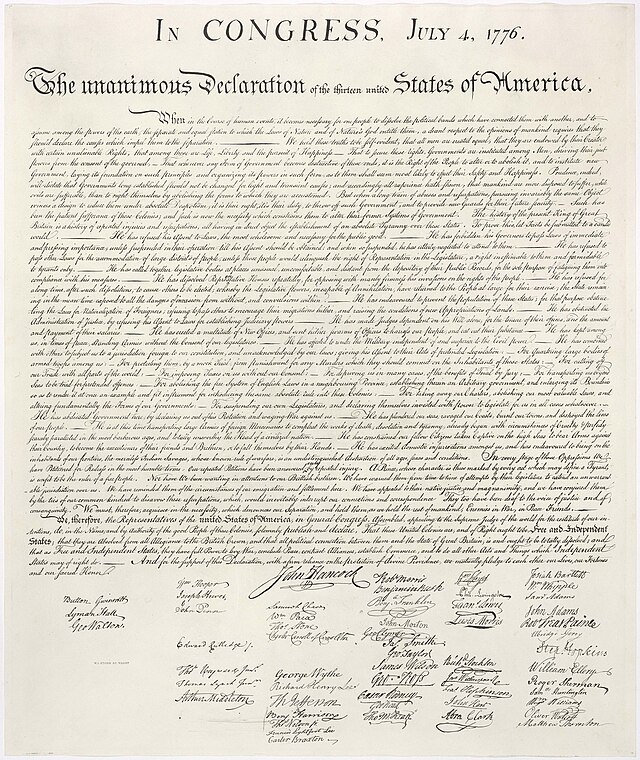
The verdict, up front: a Livingston descendant has one of the strongest cases in America for the Daughters of the American Revolution (and the Sons of the American Revolution), and essentially no claim to the Mayflower Society through the Livingston line. The family came from Scotland in 1673, half a century after Plymouth, and married into Dutch New York, not the Pilgrim families of New England. The premise that Livingstons “should be able to” join both is only half right. Here is how each society works, and exactly where the family fits.
Update, June 2026: a genuine Mayflower line has since been confirmed for this family, but it enters through Dorothy Corser's maternal ancestry, not the Livingston name. See the update at the end.
The two societies at a glance
| Feature | DAR (and SAR) | Mayflower Society (GSMD) |
|---|---|---|
| Who qualifies | Women 18+ (DAR); men (SAR) | Any person, any age in most state societies |
| The ancestor bar | Lineal descent from a Patriot who gave military, civil, or patriotic service, 19 Apr 1775 to 26 Nov 1783 | Lineal descent from one of the ~26 Mayflower passengers (of 102) who have proven descendants |
| Livingston eligibility | Strong. Multiple direct-ancestor Patriots, including a Declaration signer | None via the Livingston line, but now confirmed through a separate maternal line — the Corser and Totman descent from passenger Constance Hopkins (see the update below) |
| Core proof | Vital records for every generation, plus proof of the Patriot's service | Vital records for every generation, plus a documented match to a known Pilgrim line |
⚖️ Two different bars
The DAR asks for descent from anyone who aided American independence between 1775 and 1783. The Mayflower Society asks for descent from a specific 1620 Plymouth passenger. The Livingstons clear the first bar many times over. They do not clear the second one at all by the Livingston name, because the family had not yet crossed the Atlantic in 1620, and when it did, it landed in a Scottish-Dutch world, not a Pilgrim one.
Daughters of the American Revolution
Eligibility. Any woman at least 18 years old who can prove lineal, bloodline descent from an ancestor who aided the cause of American independence is eligible. She must document every statement of birth, marriage, and death in the line, plus the Revolutionary War service of her Patriot ancestor. Men join the parallel Sons of the American Revolution (SAR) on the same lineage logic.
What counts as service. The society accepts service rendered between 19 April 1775 (Lexington) and 26 November 1783 (British withdrawal from New York). Qualifying service is broad: signers of the Declaration of Independence, Continental and state military service, civil officeholding under the patriot government, and material or “patriotic” aid. You do not need a soldier; a wartime governor or a Continental Congress delegate qualifies.
The DAR process, step by step
- 1. Connect with a chapter. File the DAR Membership Interest Form and a local chapter registrar will reach out. There are nearly 3,000 chapters; you can also join as a member-at-large.
- 2. Pick your Patriot. Identify the Revolutionary ancestor you descend from. For a Livingston, this is the easy part (see the table below).
- 3. Build the generational chain. Assemble proof (birth, marriage, and death records) for every generation from you back to the Patriot. Marriage records are required where they are needed to prove a parent-child link.
- 4. Prove the service. Document the Patriot's qualifying Revolutionary service.
- 5. Verify, then submit. A chapter registrar helps you assemble the application; it then goes to the national society for verification. Once the formal application opens, you generally have about one year to complete it, so gather documents first.
💡 Shortcut for an old family
Many Livingston Patriots already have approved DAR application papers on file. A previously verified lineage can be ordered as a record copy and reused as documentation for a new application, as long as there is no reason to doubt it. The DAR's GRC Index and record-copy service can save a Livingston descendant years of work, because someone has very likely already proven the upper generations of your line.
Livingston Patriot ancestors to descend from
The family was, in the words of the Descendants of the Signers society, home to a Declaration signer, a Constitution signer, and “at least twenty other members of the larger Livingston family” who served as Revolutionary officers. The strongest direct-ancestor Patriots already in the family database:
| Patriot | Qualifying service |
|---|---|
| Philip Livingston (1716–1778) | Signer of the Declaration of Independence; Continental Congress |
| William Livingston | Wartime Governor of New Jersey; NJ militia brigadier general; later signer of the Constitution |
| Chancellor Robert R. Livingston | Continental Congress; member of the Committee of Five that drafted the Declaration |
| James Livingston (1747–1832) | Colonel, 1st Canadian Regiment, Continental Army (his battery fired on HMS Vulture during Arnold's treason) |
| Henry Beekman Livingston | Colonel, 4th New York Regiment, Continental Army |
| Henry Livingston Jr. | Revolutionary War officer (Continental service, 1775 Canada campaign) |
| Morgan Lewis | Continental Army officer and quartermaster general of the Northern Department; married Gertrude Livingston |
| John Jay | President of the Continental Congress; diplomat; married Sarah Livingston |
| Pierre Van Cortlandt | First Lieutenant Governor of New York; president of the NY committee of safety |
| Col. Nicholas Fish (1758–1833) | Continental Army officer; married Elizabeth Stuyvesant |
| John Kean (1756–1795) | Delegate to the Continental Congress; married Susan Livingston |
| William Alexander, Lord Stirling | Major General, Continental Army; married Sarah Livingston |
⚠️ One precision point
The DAR requires descent from the Patriot, so a Patriot who left no children cannot anchor a line. Richard Montgomery, the family's most famous war hero (killed at Quebec, 1775), married Janet Livingston but died childless. He is a Patriot the family can honor, but not one a Livingston can descend from. Choose an ancestor with surviving issue, such as the signer Philip or Governor William. For the wider story of these men, see the companion story Signers and Founders.
The Mayflower Society: the hard truth
Eligibility. The General Society of Mayflower Descendants (GSMD) admits anyone who can document lineal descent from one of the Mayflower passengers of 1620. Of the 102 passengers, only about two dozen have descendants today, though those lines now reach tens of millions of Americans.
Why the Livingston name does not qualify
The family's documented origin is the problem, and it is not close:
- The immigrant Robert Livingston “the Elder” was born in 1654 at Ancrum, Roxburghshire, Scotland, the son of the exiled Presbyterian minister Rev. John Livingston. The family fled to Rotterdam in 1663, and Robert sailed for Boston only in 1673, settling at Albany. That is 53 years after the Mayflower, and on a different track entirely.
- His wife, Alida Schuyler, and the family's early marriages (Schuyler, Van Brugh, Beekman, Van Rensselaer) were Dutch New Netherland families, not English Pilgrims.
- Even the family's one prominent New England marriage is a red herring: Mary Winthrop, who married Johannes Livingston, was a daughter of Connecticut governor Fitz-John Winthrop. The Winthrops came over in the 1630 Great Migration to Massachusetts Bay, a separate movement from the 1620 Plymouth Pilgrims.
🚢 The name confers nothing
Being a Livingston descendant does not make you a Mayflower descendant. The two streams of American ancestry simply do not meet in the Livingston line.
The only real path: a separate, non-Livingston line
An individual Livingston descendant can sometimes join the Mayflower Society, but only by proving Pilgrim descent through some other ancestral line that married in much later, and that line must be documented on its own. The clearest illustration is already in the family's research: George W. Bush is both a Livingston descendant and a Mayflower descendant, but his Pilgrim blood runs through the Bush and Walker side, not through the Livingston line that connects him to this family (see The Bushes and the Livingstons). A Livingston who wants a Mayflower card must find a Pilgrim ancestor on a branch that has nothing to do with the Livingston surname.
Update (June 2026): the family's real Mayflower line, found
Per an Ancestry.com line of descent, corroborated by published Hopkins-descendant genealogies and by the Jamestowne Society's Lineage Paper Project, the chain runs as follows. All eleven people are now in the family database with their sources attached.
| # | Ancestor | Note |
|---|---|---|
| 1 | Constance Hopkins (1606–1677) | Mayflower passenger, 1620; daughter of passenger Stephen Hopkins |
| 2 | Elizabeth Snow (1640–1678) | Married Thomas Rogers, himself a grandson of Mayflower passenger Thomas Rogers |
| 3 | Eleazer Rogers (1673–1739) | Born at Eastham, Plymouth Colony |
| 4 | Experience Rogers (1707–1750) | Married Samuel Totman, carrying the line into the Totman family |
| 5 | Joshua Totman (1737–1808) | Removed to Colrain, Massachusetts |
| 6 | Thomas Totman (1763–1815) | Family began migrating toward New York State |
| 7 | Ward Totman (1803–1892) | Settled at Bristol, Ontario County, New York |
| 8 | Levi Ward Totman (1842–1920) | Married Zylpha Marinda Moore |
| 9 | Grace Amina Totman Corser (1879–1957) | Married Henry Spencer Corser |
| 10 | Levi Spencer Corser (1898–1979) | Father of Dorothy |
| 11 | Dorothy Corser (1927–2010) | Married Edmund Livingston; the Mayflower blood enters the Livingston household here |
🚢 The prediction held, and the line has now been found
It does not run through the Livingston name. It runs through the maternal Corser line into Dorothy Corser (1927–2010), the wife of Edmund Livingston. Dorothy was a Livingston only by marriage. Her own ancestry traces, generation by documented generation, back to Mayflower passenger Constance Hopkins (1606–1677).
🎖️ Who this actually makes eligible
Mayflower eligibility belongs to the descendants of Dorothy Corser, and it reaches the Livingston side of the family only through her, not through Edmund Livingston or the Livingston bloodline. A child or grandchild of Edmund and Dorothy can join the Mayflower Society, but the application is built almost entirely on Dorothy's Corser, Totman, Rogers, Snow, and Hopkins ancestry, with the Livingston name appearing only at the very bottom as an in-marrying surname.
⚠️ A documented lead, not yet a filed proof
An Ancestry tree is a strong lead, not an accepted Mayflower Society application. The upper generations here are unusually well documented, since the Hopkins, Snow, and Rogers lines are heavily published and the Jamestowne Society already records Joshua Totman's family under qualifying ancestor Stephen Hopkins. The discovery work is essentially done. What remains is the ordinary task of assembling primary vital records for each generation, with the most attention on the 19th and 20th century New York links from the Totmans to the Corsers to Dorothy. Start with a free Mayflower Lineage Match filed on Constance Hopkins.
More than one Pilgrim
This single line carries at least two, and probably three, Mayflower passengers. It descends from Stephen Hopkins and his daughter Constance Hopkins, both 1620 passengers, and through Elizabeth Snow's husband Thomas Rogers it also descends from a third passenger, Thomas Rogers.
How the Mayflower process works (if you do have such a line)
- 1. Run a Mayflower Lineage Match (MLM). Submit a proposed lineage; the society checks it against the documented lines in the Mayflower Families Through Five Generations volumes (the “Silver Books”) and previously approved applications.
- 2. Submit a preliminary application and fees to your state member society.
- 3. Worksheet and review meeting with a state historian to map the generations.
- 4. Documentation. Provide proof for every generation from you to the passenger.
- 5. Review and approval by the state and general society.
How a Livingston should actually start
🧭 DAR / SAR — do this
Pick a direct-ancestor Patriot from the table (the signer Philip Livingston or Governor William Livingston are the safest, best-documented anchors). Order DAR record copies of any already-approved application on that Patriot's line, then document the generations down to yourself. File the Membership Interest Form to get a chapter registrar's help.
🧭 Mayflower — do this instead of chasing the Livingston name
Ignore the Livingston line. Audit your other ancestral branches, especially any colonial New England ancestry, and run a free Mayflower Lineage Match before paying for anything.
Why it matters
🎖️ This family's pedigree is Revolutionary, not Pilgrim
The Livingstons were not at Plymouth Rock; they were in the room for the Declaration, the Constitution, and the Continental Army. Their hereditary-society birthright is the DAR and the SAR, earned many times over by a single generation of brothers and cousins in the 1770s. The Mayflower is someone else's ship.
People in This Story
Related Places
Sources
- How to Join — Daughters of the American Revolution
- Accepted Revolutionary War Service — DAR
- DAR Lineage Resources (record copies & GRC Index)
- Sons of the American Revolution (SAR)
- Mayflower Lineage Match — General Society of Mayflower Descendants
- Application Process — Massachusetts Society of Mayflower Descendants
- Eligibility — Massachusetts Society of Mayflower Descendants
- Mayflower Society — Wikipedia
- Philip Livingston — Descendants of the Signers
- Robert Livingston the Elder — Wikipedia
- Livingston family — Wikipedia
- Story: From Scotland to the New World
- Story: Signers and Founders
- Story: The Bushes and the Livingstons
- Story: The Mayflower Line