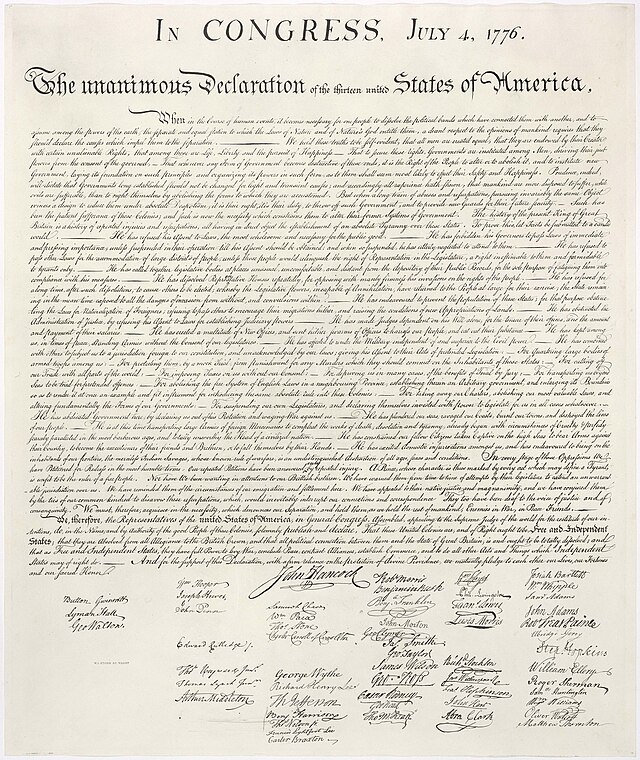
At the birth of the United States, the Livingstons were everywhere. One brother signed the Declaration of Independence. Another signed the Constitution and governed New Jersey. Their cousin helped draft the Declaration, swore in the first president, and negotiated the Louisiana Purchase.
The exact relationships matter: Philip Livingston and William Livingston were brothers, sons of the 2nd Lord of Livingston Manor. Robert R. Livingston belonged to the junior Clermont branch and was their cousin.
A Family at the Founding
| Founder | Lifespan | Branch | Defining act |
|---|---|---|---|
| Philip Livingston | 1716-1778 | Manor line | Signed the Declaration of Independence for New York |
| William Livingston | 1723-1790 | Manor line | Signed the Constitution and served as first elected governor of New Jersey |
| Robert R. Livingston | 1746-1813 | Clermont branch | Committee of Five, Chancellor of New York, Washington's oath, Louisiana Purchase |
Philip Livingston, the Signer
Philip graduated from Yale in 1737 and built a fortune as a New York City importer. He helped found the New York Society Library, St. Andrew's Society, New York Chamber of Commerce, and King's College.
He represented New York at the First and Second Continental Congresses and signed the Declaration of Independence in 1776. He died at York, Pennsylvania, in 1778 while Congress met there in exile.
The full record
Philip's mercantile wealth was entangled with slavery, including investment in slaving voyages and Caribbean plantations.
William Livingston, the Governor
William Livingston was a lawyer, political writer, militia officer, and wartime governor. In 1776 he became the first elected governor of New Jersey and held the office for fourteen years.
At the Constitutional Convention in 1787, he represented New Jersey, served on key committees, supported the compromise that gave states equal representation in the Senate, and signed the Constitution.
Robert R. Livingston, the Chancellor
Robert R. Livingston was named to the Committee of Five that drafted the Declaration of Independence but was recalled by New York before the final signing. As Chancellor of New York, he administered George Washington's first presidential oath in 1789.
As U.S. Minister to France, he negotiated the Louisiana Purchase with James Monroe, doubling the size of the United States.
Beyond the Famous Three
A wider military family
At least twenty more members of the wider Livingston family served as officers during the Revolutionary War by appointment of Congress or state legislatures.