On the Caribbean coast of Guatemala, where the Río Dulce empties into the Gulf of Honduras, sits a town that can be reached only by boat. Its people are mostly Garífuna, descendants of West Africans and Indigenous Caribs, and they call the place La Buga. On the map, though, it carries another name entirely: Livingston. It is the only town in Latin America named for this family, and it was named not for a person who ever set foot there, but for a book of laws.
The first legal genius of modern times.
Sir Henry Maine, on Edward Livingston
Named for a book of laws
🌴 The short version
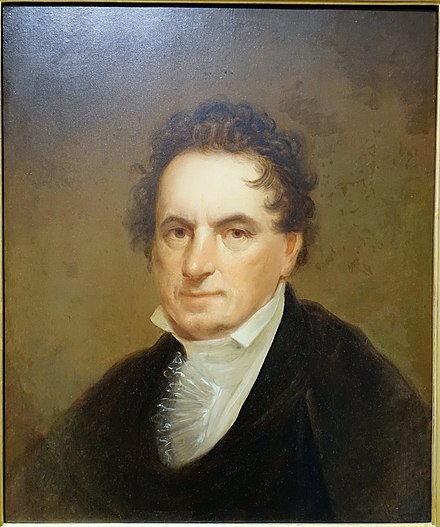
The town is named for Edward Livingston (1764–1836), the youngest brother of Chancellor Robert R. Livingston. Edward never visited Guatemala. The town honors him because the newly independent Central American republic adopted his celebrated legal code, the “Livingston Codes,” in 1835, and named a port for their author.
Who Edward Livingston was
Edward Livingston was the most intellectually ambitious of the Livingston brothers. Born in 1764 at Clermont, he was the youngest son in the generation that produced the Chancellor, who administered the oath of office to George Washington and negotiated the Louisiana Purchase. Edward followed his brother into national life on a grand scale: U.S. Representative and later Mayor of New York, then — after moving to New Orleans — U.S. Senator from Louisiana, Secretary of State under Andrew Jackson, and U.S. Minister to France.
But his lasting fame rests on law. In the 1820s Louisiana commissioned him to draft a complete criminal code. The result, known as the Livingston Code (or the “Livingston Codes”), was a systematic, humane, and strikingly modern body of criminal law. It abolished the death penalty, emphasized the prevention of crime and the rehabilitation of offenders, and insisted on clear, accessible drafting. Though Louisiana never fully enacted it, the code was translated and studied across Europe and the Americas, and it made Edward Livingston one of the most respected legal reformers of his age. Sir Henry Maine later called him “the first legal genius of modern times.” For the wider arc of this generation, see Signers and Founders and The Louisiana Purchase.
How a Guatemalan town got the name
In 1821 the Central American provinces broke from Spain, and after a brief union with Mexico they formed the Federal Republic of Central America. The young republic's reformers, looking for a modern legal framework to replace colonial Spanish law, turned to the most admired criminal code in the hemisphere. In 1836 the Guatemalan state, led by the liberal chief of state Mariano Gálvez, formally adopted a version of Edward Livingston's penal code.
To honor the author of their new laws, the authorities gave his name to a port. The settlement at the mouth of the Río Dulce — strategically important as the gateway to Lake Izabal and the interior — was christened Livingston. The town was thus named for a man who never came, in recognition of a code that bore his family's name.
⚖️ A code adopted abroad
It is a curious fact of legal history that the Livingston Code was put into force more completely in Central America than in the Louisiana that commissioned it. Guatemala's liberals embraced it as a symbol of a modern, rational, post-colonial state.
The town today
| Detail | Description |
|---|---|
| Local name | La Buga (Garífuna) |
| Department | Izabal, Guatemala |
| Setting | Caribbean coast at the mouth of the Río Dulce; accessible only by boat |
| People | Predominantly Garífuna, with Maya Q'eqchi' and Ladino communities |
| Named for | Edward Livingston (1764–1836), author of the Livingston Codes |
| Named when | 1830s, after Guatemala adopted his penal code |
A monument half a world from the Hudson
Today Livingston is a center of Garífuna culture, known for its music, its language, and its distinctive Caribbean cuisine. Most of its residents have no particular connection to the New York gentry whose name they carry, and the link to the Louisiana statesman is a piece of trivia even many locals find surprising. But the name persists — a small, permanent monument, half a world from the Hudson, to the one Livingston brother who made his mark not in war or diplomacy but in the written law.
🌴 Why it belongs in this history
Most of the family's legacy is anchored in New York and the early republic. Livingston, Guatemala, is the family name's farthest outpost — proof that Edward Livingston's ideas traveled further than the man himself ever did.