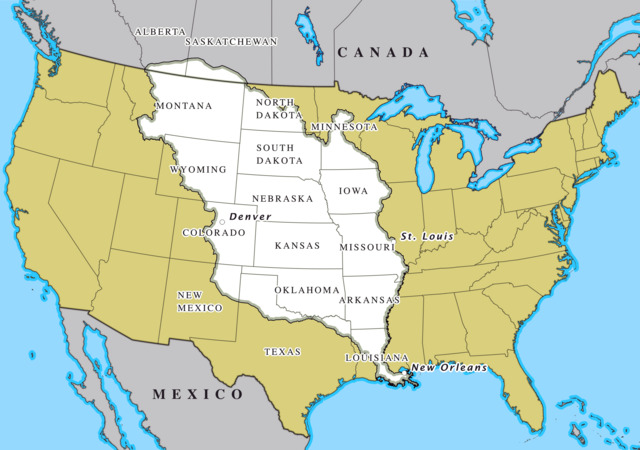
In 1803 a Livingston of the Clermont branch closed one of the largest land transfers in American history. Robert R. Livingston was sent to Paris to help secure New Orleans. He returned having helped double the size of the United States.
Let the Land rejoice, for you have bought Louisiana for a Song.
Gen. Horatio Gates to Thomas Jefferson, July 18, 1803
The Diplomat
Robert R. Livingston had helped draft the Declaration of Independence and, as Chancellor of New York, had sworn in George Washington. In 1801, Thomas Jefferson appointed him United States Minister to France.
His Louisiana work became the diplomatic high point of the family's public service.
The Crisis Over New Orleans
The United States depended on the Mississippi River and the port of New Orleans to move western produce to market. When Spain secretly retroceded Louisiana to France, Napoleon's presence on the Mississippi became a direct strategic threat.
Jefferson's instructions were modest: buy New Orleans and the Floridas if possible. The continent was not the original target.
Napoleon Changes His Mind
Napoleon's army in Saint-Domingue had been wrecked by yellow fever and revolution, war with Britain was about to resume, and France needed cash. On April 11, 1803, Talleyrand stunned Livingston by asking what the United States would give for the whole of Louisiana.
The Deal
| Term | Detail |
|---|---|
| Date signed | April 30, 1803, Paris |
| Price | $15 million, roughly $11.25 million plus about $3.75 million in assumed French debts |
| Area | About 828,000 square miles, or about 530 million acres |
| Cost per acre | About 3-4 cents |
| Effect | Doubled the size of the United States |
| U.S. negotiators | Robert R. Livingston and James Monroe |
| Senate ratification | October 20, 1803 |
The noblest work of my life
Livingston later used that phrase for the purchase. New York's statue of him in the U.S. Capitol depicts him holding the Louisiana Purchase deed.
An Unexpected Sequel: The Steamboat
In Paris, Livingston also met Robert Fulton. Livingston held an exclusive Hudson River steam-navigation grant and financed Fulton's work. In 1807 their North River Steamboat, later known as the Clermont, proved steam power commercially viable between New York and Albany.
People in This Story
Related Places
Sources
- Louisiana Purchase Treaty - National Archives
- The Louisiana Purchase - Monticello
- Louisiana Purchase - Office of the Historian
- Robert Livingston - American Battlefield Trust
- Robert R. Livingston's Louisiana Purchase Letter - Historic New Orleans Collection
- Robert R. Livingston Statue - Architect of the Capitol