The crest you have seen online is probably the wrong one
Two unrelated families share the Livingston name. Most “Livingston crest” merchandise shows the other one.
Search “Livingston coat of arms” and you will mostly find a robed figure holding a bishop’s staff. That is the badge of the Highland Clan MacLea, the Livingstones of Bachuil, keepers of the crozier of Saint Moluag on the Isle of Lismore. It is a real and ancient crest. It is not ours.
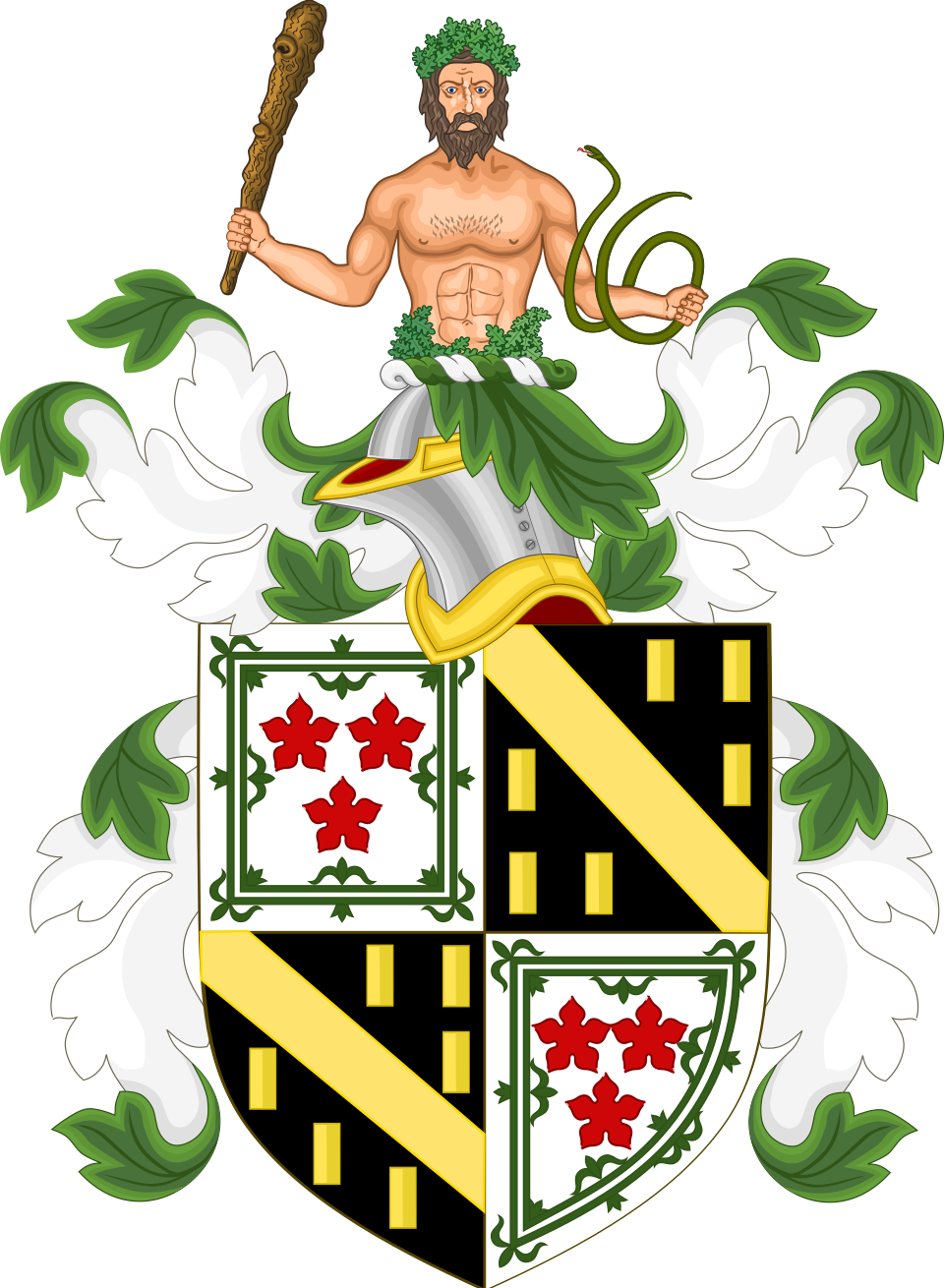
The New York Livingstons (manor lords, chancellors, and signers) descend from the Lowland Livingstons of Callendar and Linlithgow in West Lothian. Their heraldry is the Si je puis shield described below: a silver field, three red flowers, a green royal border, and a club-wielding Hercules standing guard above.
The quick test. A figure with a bishop’s staff is the other Livingstones. Three red flowers and a wild man with a club are our arms.
The arms
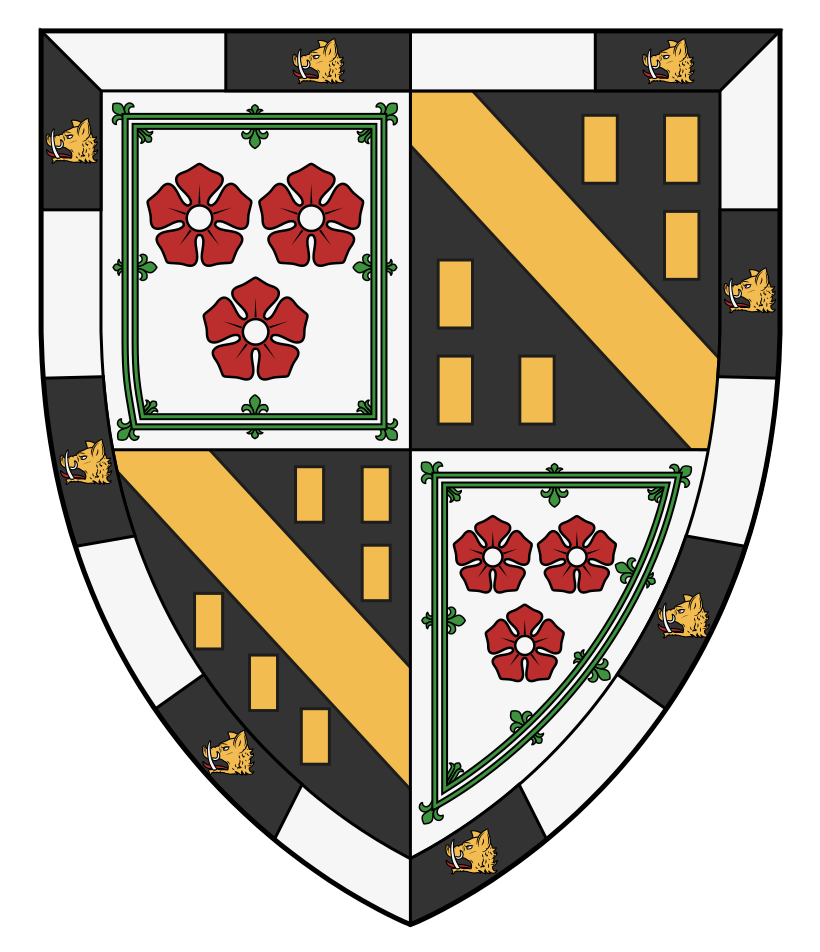
The full shield joins the Livingston arms to those of Callendar, brought together by a 14th-century marriage.
| Quarter | Blazon | In plain English |
|---|---|---|
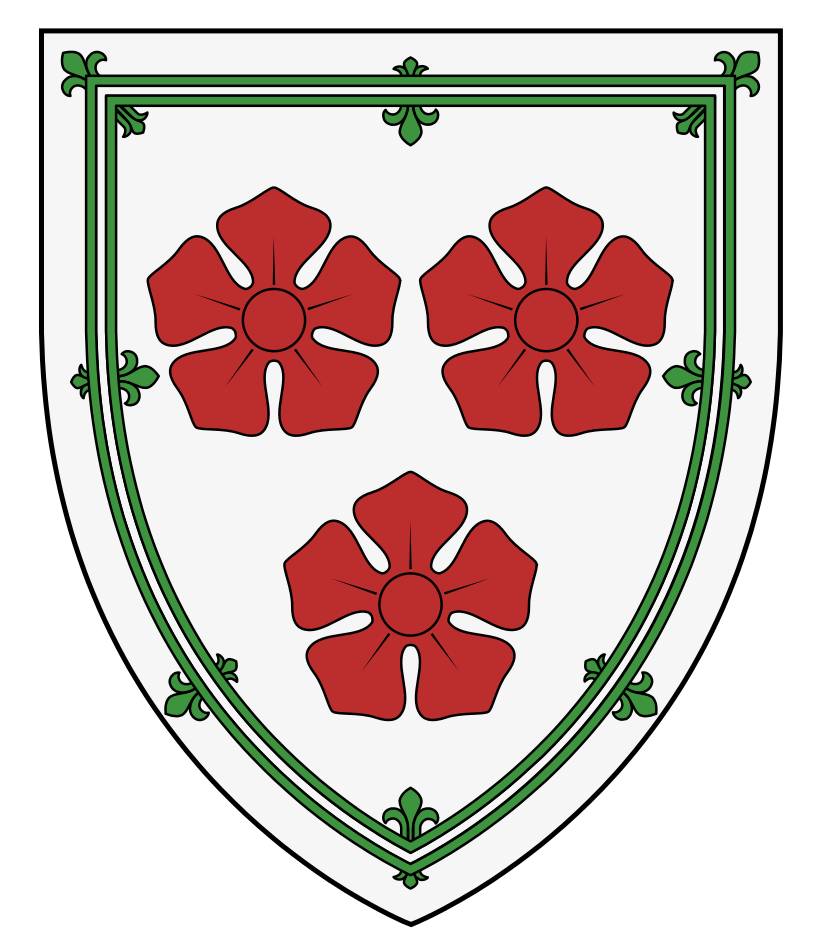
| Livingston (1 & 4) | Argent, three cinquefoils (gillyflowers) Gules, within a double tressure flory counter-flory Vert | A silver shield with three red five-petalled flowers, ringed by a green double border of alternating fleurs-de-lis. |
| Callendar (2 & 3) | Sable, a bend between six billets Or | A black shield with a gold diagonal band flanked by six small gold rectangles. |
The earliest and simplest form, carried by Sir William Livingston of Callendar (died 1364), was just Argent, three cinquefoils Gules. The black-and-gold Callendar quarter joined the shield after his marriage to the Callendar heiress brought that inheritance into the family.
The crest
What sits above the shield.
A demi-Hercules, wreathed about the head and waist. In his right hand a club, in his left a serpent coiled about his arm, all in natural colours.
The American Livingstons used the crest and motto of the Earls of Linlithgow branch. The club-and-serpent wild man is the standard crest of the Lowland line, and the clearest way to tell it apart from the Saint Moluag figure of the unrelated Highland clan.
The motto
Si je puis
Norman French for “If I can.”
A terse, characteristically Scots claim of capability and resolve. The Highland Livingstones use a Gaelic motto, Ni mi e ma’s urrainn dhomh (“I shall do it if I can”), said to play on this older and unrelated one. That echo is part of why the two families get confused so often.
What the symbols mean
Four elements, four meanings.
Three cinquefoils
Five-petalled flowers, also called fraises. The defining mark of the Livingston name across every branch.
The double tressure
The green fleur-de-lis border also frames the Royal Arms of Scotland, a signal of high standing and close royal service.
The bend and billets
Borrowed from the House of Callendar, and through it the medieval Earls of Lennox.
The demi-savage
A wild man holding a club and a serpent. Strength set beside wisdom and prudence.
Why there is no single Livingston crest
The detail every heritage shop leaves out.
Under Scots law, administered by the Court of the Lord Lyon, a coat of arms belongs to one person, not to a surname. Strictly speaking there is no such thing as a family coat of arms. Every rightful bearer carries a version set apart from the head of the house. A younger son or a new branch adds a small mark such as a star, a crescent, or a shell, or changes a colour to signal its place in the line.
That is exactly why one Livingston stem threw off a whole family of related but distinct shields. The senior line, Livingston of Callendar and later Earls of Linlithgow, held the undifferenced arms. Every branch below is a variation on them.
The branches and their shields
One surname, many houses, each set apart in the heraldry.
| Branch | Who they were | How the arms differ |
|---|---|---|
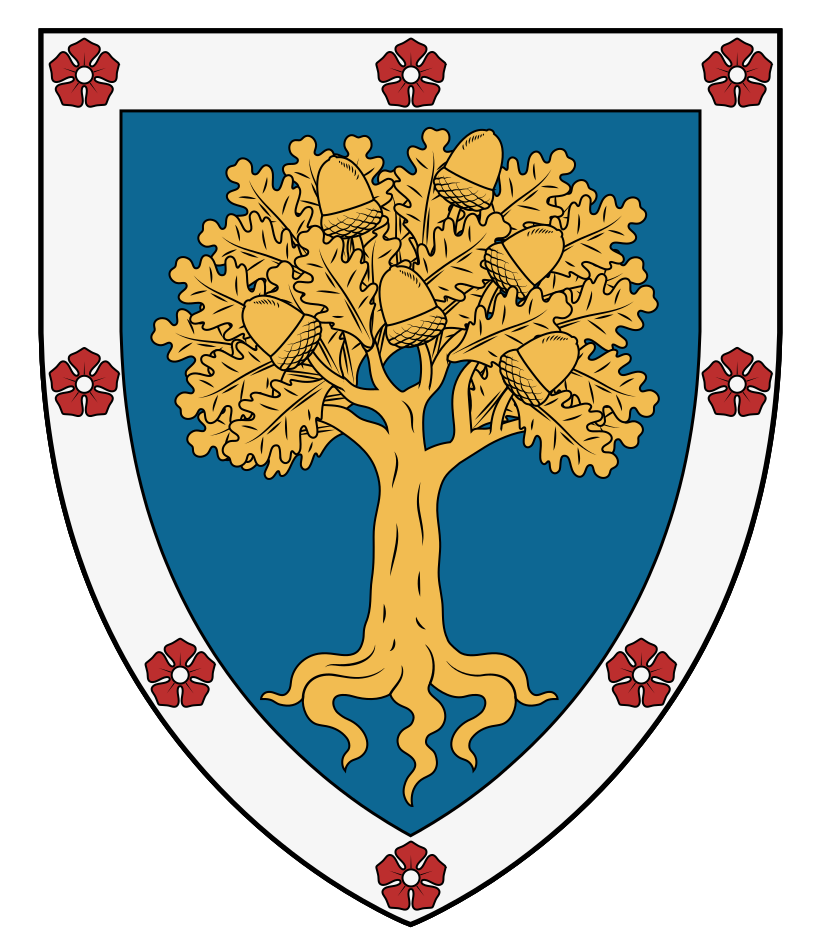
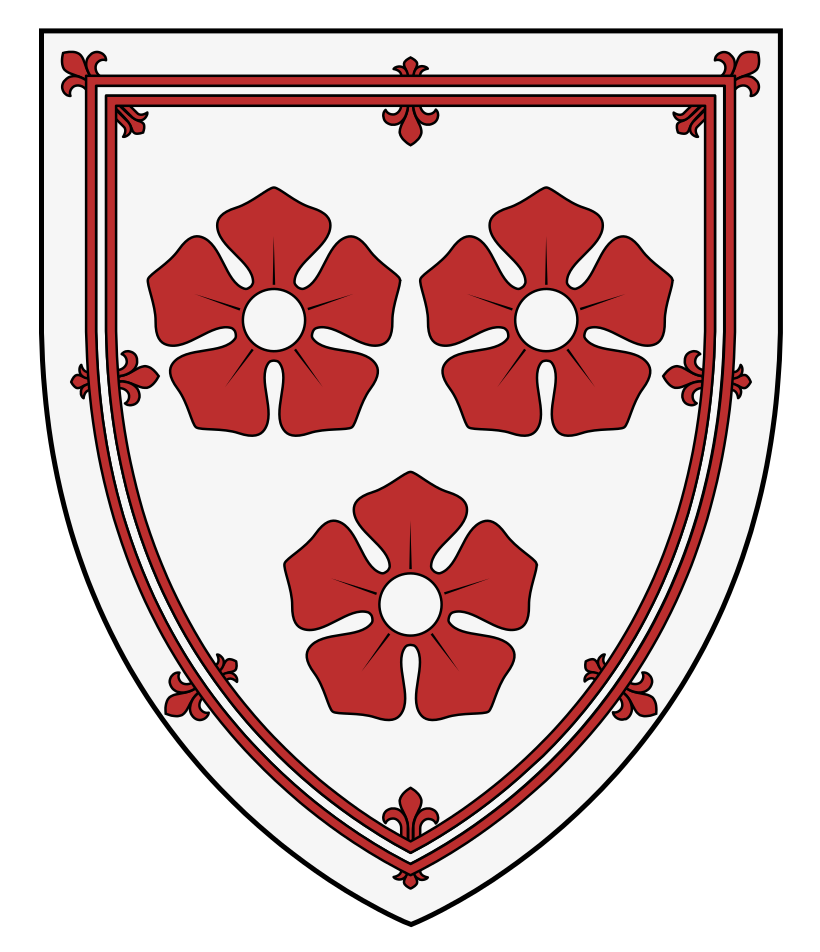
| Livingston of that Ilk | The original Lowland stem. The male line ended by about 1518, after Sir Bartholomew fell at Flodden. | The plain arms: three red cinquefoils, without the royal border. |
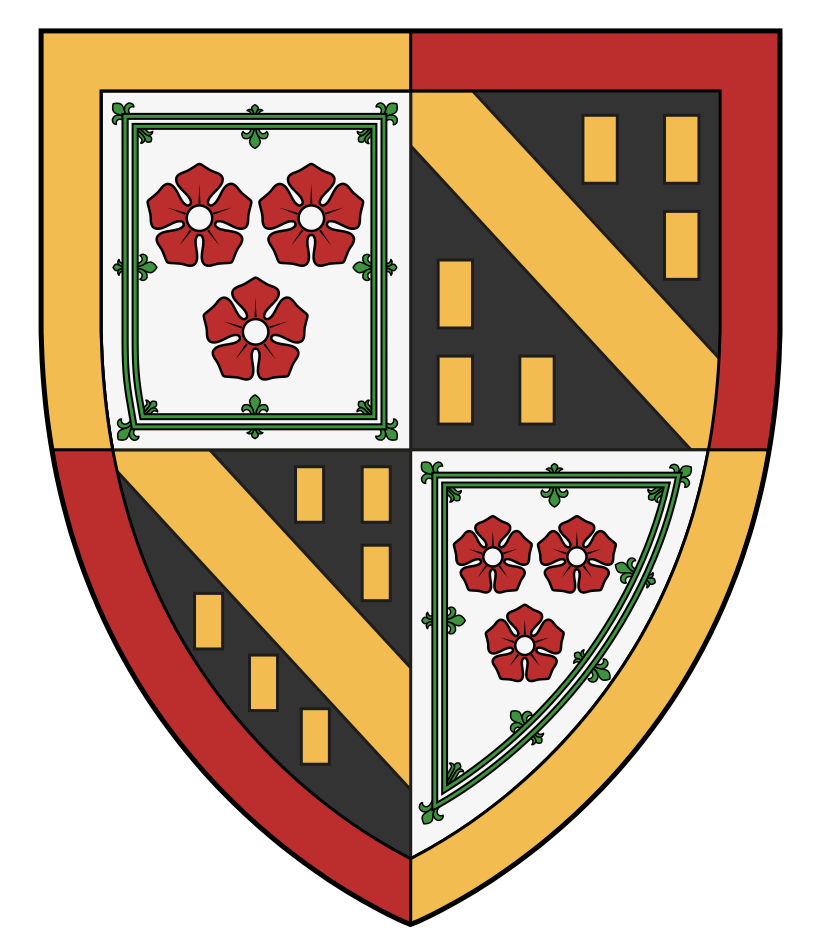
| Callendar, later Earls of Linlithgow | The senior line and chief house. The earldom was forfeited in 1715 for backing the Jacobites. | The full arms with the royal tressure, quartered with Callendar. This is the basis of the American arms. |
| Viscounts of Kilsyth | Raised in 1661. The title was struck down in 1716 for the same Jacobite cause. | The Callendar arms with a mullet (star) added in the border to set the branch apart. |
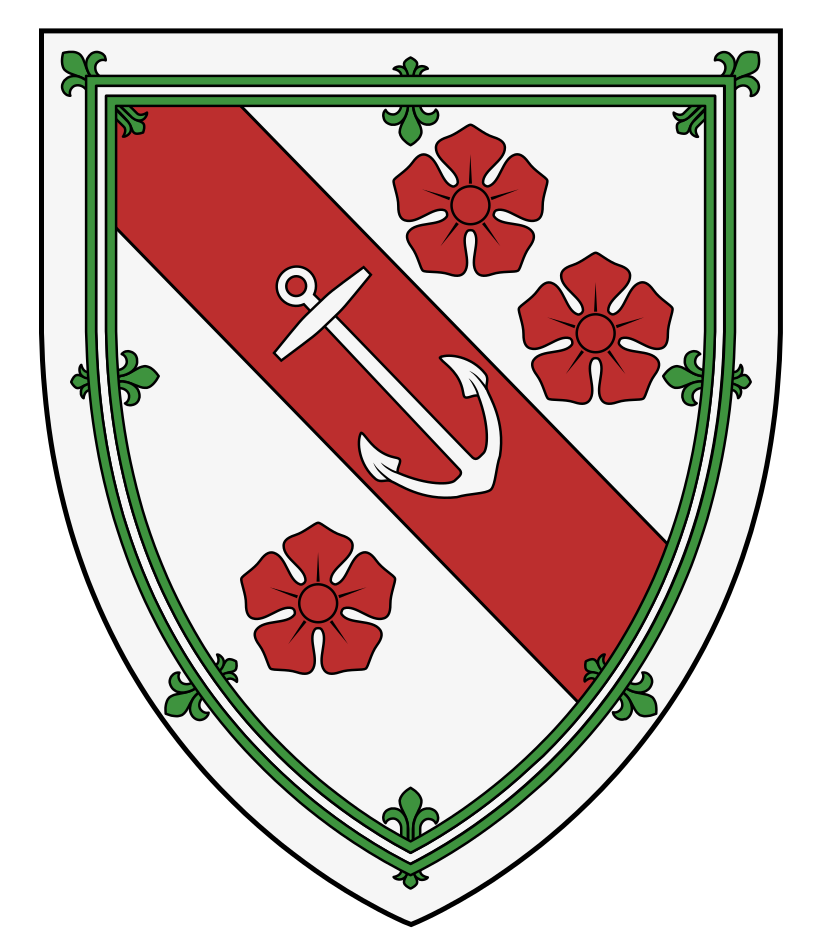
| Earls of Newburgh | Created in 1660. The title uniquely survives today through female-line descent in an Italian family. | The most reworked shield: a blue band carrying an anchor, set between the cinquefoils. |
| Westquarter, Dunipace and Bonton | Junior baronet and laird branches of the 16th and 17th centuries. | Variations on the cinquefoil arms, though historians note these branches were rather casual about consistent differencing. |
| Glentirran | A Nova Scotia baronet line. | Eventually dropped the name altogether and took up the arms of Campbell of Ardkinglass. |
Branch shields in color
These WappenWiki renderings show how closely the branch shields follow the same visual grammar: cinquefoils, borders, quarterings, and small differences that mark descent.


Where our family fits
Not a great earldom, but a line of country ministers.
The New York Livingstons did not descend from one of the titled cadets above. They came from a quieter clerical offshoot of the main Callendar stem, the ministers of Monyabroch (the old name for Kilsyth). The immigrant patriarch, John Livingston (1603 to 1672), was born there. His father and grandfather had served the same parish before him.
The heraldry backs this up. Family records trace the line to William, 4th Lord Livingston of Callendar (died about 1518), who married Agnes Hepburn. That marriage is almost certainly why the American arms, as recorded in Bolton’s American Armory, carry a Hepburn quarter, a small heraldic fingerprint of exactly that descent.
What we are confident about
That the family descends from the Monyabroch ministers and bore the Callendar and Linlithgow arms with a Hepburn quarter.
What is still debated
The exact link between those ministers and the Lords Livingston. Genealogists still disagree, and it is not fully proven from primary sources.