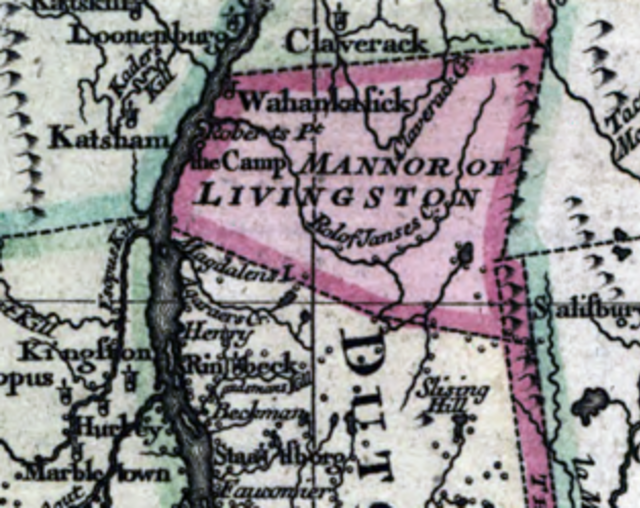
Three generations held the Lordship of Livingston Manor, one of the largest private land grants in colonial America. Mastery of the land brought wealth, office, and a long quarrel with the tenants who farmed it.
The 1715 royal charter did more than confirm acreage. It created a true manor with court privileges and its own seat in the colonial assembly.
A Lordship, Not Just an Estate
For three generations, the Lord of the Manor was landlord, magistrate, and legislator over a domain larger than many European principalities.
A junior Clermont branch also emerged when Robert of Clermont received a separate tract at the manor's southern edge. That branch produced Chancellor Robert R. Livingston, but it was not the main lordship line.
The Three Lords at a Glance
| Lord | Name | Lordship | Defining role |
|---|---|---|---|
| 1st | Robert Livingston the Elder (1654-1728) | 1686-1728 | Founder; Secretary for Indian Affairs; assembled the patent |
| 2nd | Philip Livingston (1686-1749) | 1728-1749 | Merchant, officeholder, and consolidator of the estate |
| 3rd | Robert Livingston (1708-1790) | 1749-1790 | Iron industry, Revolutionary support, and final Lord of the Manor |
First Lord: Robert Livingston the Elder
Robert, a Scots immigrant fluent in Dutch, used marriage, office, and land purchases to create the manor. His service as Secretary for Indian Affairs placed him at the center of colonial diplomacy and trade.
Second Lord: Philip Livingston
Philip Livingston inherited the manor in 1728. He served as a militia colonel, provincial councilor, and commercial operator from Albany and New York City.
His West Indian trade connected him to the transatlantic slave trade, including direct importation from Africa and investment in slaving voyages. That uncomfortable ledger is part of the family's colonial wealth.
The uncomfortable ledger
The manor's wealth cannot be separated from enslaved labor and Atlantic commerce. The site names that history rather than sanding it off.
Third Lord: Robert Livingston
Robert Livingston, born in 1708, represented the manor in the colonial assembly and developed iron mines and a foundry. During the Revolution, he placed those resources at the disposal of the New York Committee of Safety.
He died in 1790. With the new republican order, the formal lordship effectively ended and the land was increasingly divided among heirs and sold.
The Tensions That Came With the Land
Livingston leases gave tenants little security in the improvements they made. Unlike some neighboring leases, they did not reliably pass to descendants, so barns, fields, and cleared land could enrich the landlord without creating ownership for the farmers.
The grievance fed boundary conflicts with Massachusetts settlers and the great tenant uprising of 1766, when armed farmers demanded fee-simple ownership. The issue survived the Revolution and flared again in the anti-rent wars of the 1840s.